Monday, August 31, 2009

Has science explained life after death?

Has science explained life after death?
In 1991, Atlanta, Ga. resident Pam Reynolds had a near-death experience (NDE). Reynolds underwent surgery for a brain aneurysm, and the procedure required doctors to drain all the blood from her brain. Reynolds was kept literally brain-dead by the surgical team for a full 45 minutes. Despite being clinically dead, when Reynolds was resuscitated, she described some amazing things. She recounted experiences she had while dead -- like interacting with deceased relatives. Even more amazing is that Reynolds was able to describe aspects of the surgical procedure, down to the bone saw that was used to remove part of her skull [source: Parker].

­Courtesy StockXchng­
It is estimated that as many as 18 percent of people who have been resuscitated after cardiac arrest have reported a near-death experience.
What's remarkable (although not unique) about Reynolds' experience is that it is the combination of an NDE and an out-of-body-experience (OBE). HowStuffWorks has braved this territory on the edge of reality, explaining how near-death experiences work and how a person can have an out-of-body experience. Science, too, has made its own headway toward explaining these weird phenomena. Two studies on the separate aspects of Reynolds' experience were conducted in 2007. Each seems to explain how a person can have an OBE or a NDE, but do they hold up in explaining experiences like Reynolds'?
­­
­As many as 18 percent of people brought back from death after a heart attack said they'd had a NDE [source: Time]. While many religious adherents might not be surprised by these accounts, the idea that human consciousness and the body exist distinctly from each other flies in the face of science. A brain-dead person should not be able to form new memories -- he shouldn't have any consciousness at all, really. So how can anything but a metaphysical explanation cover NDEs?

A study from the University of Kentucky has quickly gained ground among scientists as possibly the best explanation for NDEs. Researchers there theorize that the mysterious phenomenon is really an instance of the sleep disorder rapid eye movement (REM) intrusion. In this disorder, a person's mind can wake up before his body, and hallucinations and the feeling of being physically detached from his body can occur.

The Kentucky researchers believe that NDEs are actually REM intrusions triggered in the brain by traumatic events like cardiac arrest. If this is true, then this means the experiences of some people following near-death are confusion from suddenly and unexpectedly entering a dream-like state.

This theory helps explain what has always been a tantalizing aspect of the mystery of NDEs: how people can experience sights and sounds after confirmed brain death. The area where REM intrusion is triggered is found in the brain stem -- the region that controls the most basic functions of the body -- and it can operate virtually independent from the higher brain. So even after the higher regions of the brain are dead, the brain stem can conceivably continue to function, and REM intrusion could still occur [source: BBC].

This sounds like a good explanation for NDEs, but what about OBEs? Are they the same thing? Read the next page to discover the distinctions between near-death and out-of-body experiences.

(courtesy howstuffworks.com)

supernatural

n't be scared, find out science behind the supernatural phenomena i.e. ghosts, UFO, unexplainable lights etc.

1. Has science explained life after death?

2. Paranormal activity of the century


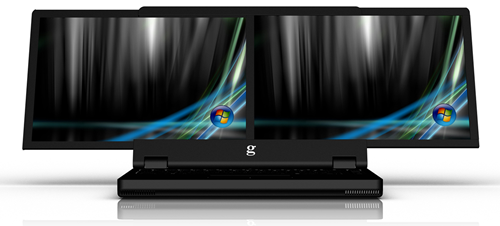
gScreen shows off dual-display laptop, Spacebook

Using a laptop has distinct advantages over desktops, most prominently in the mobility department. To gain that boost in portability, though, sacrifices must be made. As a whole, laptops lack the computing muscle offered by their clunky counterparts. That shows in more areas than one - not least in precious screen real estate.

Acknowledging this, a little-known company named gScreen has earned a seat in the limelight with its dual-display-packing notebook. Called "Spacebook," gScreen is working on models that house two 13, 15.4, 16, or 17-inch LED-backlit LCD displays. With a specifically tailored sliding mechanism, the Spacebook's secondary display can be slipped out when needed, and tucked away when not.
In an interview with Gizmodo, gScreen said the Spacebook's specifications will include an Intel Core 2 Duo, 4GB of RAM, an Nvidia GeForce GF900M, a 7200RPM HDD, DVD drive, six or nine-cell battery and Windows 7. The company's website has more details, listing a Core 2 Duo P8400, 4GB DDR2 RAM, 320GB 7200RPM HDD, 512MB Nvidia GeForce 9800M GT or Quadro FX 1700M, and VGA/HDMI-out.
Given the slightly dated specifications, I assume the Spacebook's hardware will be revamped in the models to come. As attractive as a laptop with two displays may be, the complete package probably weighs in excess of 12lbs, not to mention the elevated power consumption. Just something to keep in mind before you plunk down your hard earned dollars.
The company is pressing for December 2009 launch -- probably to snag a few holiday sales -- and plans to have the first units sold via Amazon. Although there is no official price established, gScreen is reportedly trying to keep it below $3,000.

(courtesy techspot)

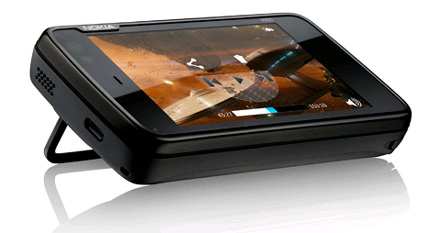
Nokia unveils Linux-based smartphone, N900

In addition to elbowing its way into the netbook scene, Nokia has unveiled a new smartphone, the N900. Keeping its Internet Tablet devices close to heart, the company has given life to a tablet-smartphone-Frankenstein. The company sees its new handset as an evolution from its tablets - which, naturally, lacked cellular functionality.

The N900 will run Maemo 5, and feature a 3G cellular connection (WCDMA and HSPA at 900/1700/2100 MHz), a WVGA touchscreen display and hardware QWERTY keyboard. It will pack an ARM Cortex-A8 processor, 1 GB of RAM, 32GB of storage (expandable up to 48GB via microSD), and OpenGL ES 2.0 graphics acceleration. Nokia's new smartphone will be capable of multitasking, it will run a browser made by Mozilla, and will support Adobe Flash 9.4.
Opinions of the N900 are mixed. Most seem to believe it will be a niche product only purchased by early adopters. Research firm CCS Insight considers the device an experiment, saying, "Its uninspiring design further reflects its experimental nature." They also feel that its appeal will largely lie in its software platform.
Experimental or otherwise, the N900 has quite the feature-set. Nokia's Franken-phone will be available in early October with an asking price of $712 before taxes and subsides. See the Nokia N900 and Maemo 5 in action after the jump.

(courtesy techspot)

Sunday, August 30, 2009

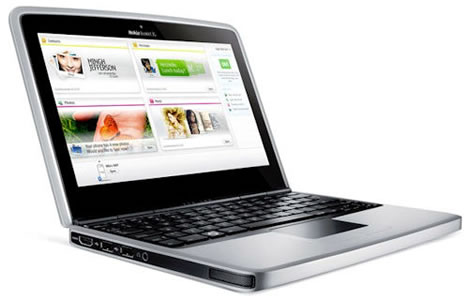
Nokia enters netbook market with Booklet 3G

We’ve been hearing rumors about a Nokia netbook for some months now, but today the Finnish company has actually made it official with the “Booklet 3G” — a stylish Intel/Microsoft-based netbook that promises an ambitious 12-hour battery life, a weight of just 2.75 pounds, and the kind of extras you would expect from a cell phone manufacturer.

The Booklet 3G is a Windows machine powered by an Atom processor and, according to Nokia, will have close ties to the company's Ovi suite of online services and mobile applications currently available to Nokia handset owners. Its thin (0.7 inches) aluminum case holds an HDMI-out port, along with the usual webcam, Bluetooth, SD card reader and 10.1-inch display.

(courtesy techspot)

Wheelchair of the future takes on the scooter

Sometimes function can successfully follow form. That may be the case for Japan's Veda International Robot R&D Center, whose electric wheelchair for the immobile and elderly might be giving scooters and electric cars a little competition in the looks department.
The "universal vehicle" Rodem (model number M1-1) operates for about four hours per charge. My favorite feature, though, is the accelerator (of course, in electric vehicles, there are no "ignitions" or "gas pedals"), which a very smart person decided should come in the form of a joystick, thereby titillating the gamers of younger generations.

Of course, the "high" speed of the Rodem M1-1 is 3.5 kilometers (2 miles) per hour, so when it comes to giving electric cars and scooters a run for their money, well, this is more likely to be a toy for wealthy mall rats (they should hire Paris Hilton) than anyone aiming to look cute on the street.
So beyond being electric, what makes this next-generation wheelchair, well, next-gen? Ergonomics. Because riders sit in a more upward position, taking a seat from behind and relaxing forward, it is both easier to mount and friendlier on the lower back--not to mention on caregivers the world over:
When a wheelchair is used, an elderly or disabled person has to go through seven processes, sitting up on the bed, leaning forward, leaving the bed, turning his or her back to the wheelchair, sitting on the seat, sitting up on the seat and moving backward...It is possible to ride on the Rodem through three processes, which are sitting up on the bed, leaning forward and leaving the bed, reducing the burden on caregivers.
Veda International plans to select a partner company to mass-produce these for an autumn 2009 release at about 500,000 to 700,000 yen, or $5,300 to $7,500--a pop.

(courtesy techspot)

Gadgets As They Appear

Sift through gadgets as they appear in the market...


1. gScreen shows off dual-display laptop, Spacebook

2. Nokia unveils Linux-based smartphone, N900

3. Nokia enters netbook market with Booklet 3G

4. Wheelchair of the future takes on the scooter

5. A 3D scanner elected in the Top 7 of inventions CeBIT

6. USB Roll-Up Piano for Your Computer

7. Toyota RiN Concept

8. In-car steering wheel laptop idea

9. Onkyo intros dual-screen laptop, Sotec DX1007

Algae-coated buildings touted as climate fix

The future of green technology is algae-cultivating buildings, artificial trees, and lots of white roofs, according to the U.K.'s Institution of Mechanical Engineers.
The group on Thursday released a report that recommends governments fund research on geoengineering, or large-scale fixes for climate change. The report, a year in the making, is targeted at policymakers and is meant to inspire engineers to develop ways to cut greenhouse gas concentrations in the atmosphere.
As concern grows over climate change, a number of geoengineering ideas have been proposed, including placing mirrors in space to reflect sunlight or shooting sulfur particles into the stratosphere, which would also have a cooling effect.
However, in its analysis, the Institution of Mechanical Engineers found that most promising geoengineering techniques can be done on Earth. It argues that a handful of technologies be deployed at large scale, along with other strategies, to mitigate the effects of climate change.

At the top of the list are artificial trees, which are mechanical devices that can absorb carbon dioxide from the air faster than trees and then sequester that gas underground.
The institution's report refers to the research done by Columbia University Professor Klaus Lackner, who is researching the concept and materials to absorb large amounts of CO2. Also required are underground storage formations, such as depleted oil wells. At a cost of $20,000 per tree, the institution concludes that it's the most practical approach.
Cultivating algae to make liquid fuel is one of the most active areas of research in biofuels. The institution recommends that algae be incorporated into buildings so algae can be grown at a large scale.
How artificial trees, which capture carbon from the air,
could be deployed alongside wind turbines.
(Credit: Institution of Mechanical Engineers)

Engineers envision that long plastic tubes, called photobioreactors, be integrated into building designs or retrofitted onto existing skyscrapers.

Algae would grow from pumped-in carbon dioxide and sunlight and be harvested for use either as a liquid fuel to run in a combined heat-and-power unit or turned into biochar, or charcoal used as a soil conditioner that also sequesters carbon from the air.
Finally, the institution says that buildings should be retrofitted with reflective roofs to deflect the sun's rays. In the past months, U.S. Energy Secretary Steven Chu has publicly touted this relatively low-tech approach, which was studied in-depth at the Lawrence Livermore Laboratory last year.
Although proposing billions of white roofs doesn't appear to be controversial, many other geoengineering ideas are. For example, scientists have warned about the environmental impact--or effectiveness--of "seeding" the ocean with iron to spur growth of plankton to sequester carbon.
In anticipation of a report on geoengineering from the U.K.'s Royal Society next week, watchdog ETC Group warned against unintended consequences from large-scale projects. "Even the most careful computer models won't be able to predict what will happen if an experiment is scaled-up and moved out of doors," the group said in a statement Friday.

Overheating iPhone reports 'exploding' all over France, Apple responds

Reports of iPhones exploding, starting fires and killing people in cold blood have been around since the inception of the handset. They've also been relatively sporadic, seemingly short on evidence, and Apple hasn't given complaints much credence or response. So when we heard a story from France the other day about a security guard's iPhone "exploding" and sending a shard of glass into his eye (though apparently not serious enough to warrant a hospital visit), it was a little hard to believe, but with a few other stories of cracking screens due to overheating cropping up in Europe over the past couple weeks, French authorities have taken an interest in the story. Anecdotally, a teen says his phone "imploded" in Belgium and gave him a headache, a woman's phone cracked without warning, and ten or so victims in France have come forward to complain of similar problems, picking up the interest of a French consumer watchdog group. Apple is naturally not new to the concept of overheating in its battery-powered devices -- in fact, it's just entered into its first full-on iPod nano recall in Korea of the 1st-gen players after numerous reports of battery faultiness worldwide -- but with 26 million iPhones out and about, and the iPhone 3GS tending to run a bit hotter than its siblings, a systemic problem with one or all models of the handsets isn't something consumers or Apple would take lightly.
Herve Novelli, France's top trade official, met with Apple France's Michel Coulomb today to discuss the problem, and so far Apple is sticking to its guns: it claims that reported incidents are in the single digits, and that all cases it's investigated fully so far have turned out to be blamed on "external force" to the screen. Herve and Michel seem to have parted on friendly terms, promising to keep in touch over the issue, and the EU's alert system for dangerous consumer products (inexplicably dubbed RAPEX) is staying in the loop as well, asking the 27 member nations to keep tabs on the situation. Novelli says it's "too early to blame anyone," and we'd have to agree, but we hope Apple keeps up the (freshly) open communication about this issue going forward.

(courtesy cnet)

Bill would Give US President Emergency Control of Internet

Internet companies and civil liberties groups were alarmed this spring when a U.S. Senate bill proposed handing the White House the power to disconnect private-sector computers from the Internet.
They're not much happier about a revised version that aides to Sen. Jay Rockefeller, a West Virginia Democrat, have spent months drafting behind closed doors. CNET News has obtained a copy of the 55-page draft of S.773 (excerpt), which still appears to permit the president to seize temporary control of private-sector networks during a so-called cybersecurity emergency.
The new version would allow the president to "declare a cybersecurity emergency" relating to "non-governmental" computer networks and do what's necessary to respond to the threat. Other sections of the proposal include a federal certification program for "cybersecurity professionals," and a requirement that certain computer systems and networks in the private sector be managed by people who have been awarded that license.
"I think the redraft, while improved, remains troubling due to its vagueness," said Larry Clinton, president of the Internet Security Alliance, which counts representatives of Verizon, Verisign, Nortel, and Carnegie Mellon University on its board. "It is unclear what authority Sen. Rockefeller thinks is necessary over the private sector. Unless this is clarified, we cannot properly analyze, let alone support the bill."
Representatives of other large Internet and telecommunications companies expressed concerns about the bill in a teleconference with Rockefeller's aides this week, but were not immediately available for interviews on Thursday.
A spokesman for Rockefeller also declined to comment on the record Thursday, saying that many people were unavailable because of the summer recess. A Senate source familiar with the bill compared the president's power to take control of portions of the Internet to what President Bush did when grounding all aircraft on Sept. 11, 2001. The source said that one primary concern was the electrical grid, and what would happen if it were attacked from a broadband connection.
When Rockefeller, the chairman of the Senate Commerce committee, and Olympia Snowe (R-Maine) introduced the original bill in April, they claimed it was vital to protect national cybersecurity. "We must protect our critical infrastructure at all costs--from our water to our electricity, to banking, traffic lights and electronic health records," Rockefeller said.
The Rockefeller proposal plays out against a broader concern in Washington, D.C., about the government's role in cybersecurity. In May, President Obama acknowledged that the government is "not as prepared" as it should be to respond to disruptions and announced that a new cybersecurity coordinator position would be created inside the White House staff. Three months later, that post remains empty, one top cybersecurity aide has quit, and some wags have begun to wonder why a government that receives failing marks on cybersecurity should be trusted to instruct the private sector what to do.

Rockefeller's revised legislation seeks to reshuffle the way the federal government addresses the topic. It requires a "cybersecurity workforce plan" from every federal agency, a "dashboard" pilot project, measurements of hiring effectiveness, and the implementation of a "comprehensive national cybersecurity strategy" in six months--even though its mandatory legal review will take a year to complete.
The privacy implications of sweeping changes implemented before the legal review is finished worry Lee Tien, a senior staff attorney with the Electronic Frontier Foundation in San Francisco. "As soon as you're saying that the federal government is going to be exercising this kind of power over private networks, it's going to be a really big issue," he says.

Probably the most controversial language begins in Section 201, which permits the president to "direct the national response to the cyber threat" if necessary for "the national defense and security." The White House is supposed to engage in "periodic mapping" of private networks deemed to be critical, and those companies "shall share" requested information with the federal government. ("Cyber" is defined as anything having to do with the Internet, telecommunications, computers, or computer networks.)
"The language has changed but it doesn't contain any real additional limits," EFF's Tien says. "It simply switches the more direct and obvious language they had originally to the more ambiguous (version)...The designation of what is a critical infrastructure system or network as far as I can tell has no specific process. There's no provision for any administrative process or review. That's where the problems seem to start. And then you have the amorphous powers that go along with it."
Translation: If your company is deemed "critical," a new set of regulations kick in involving who you can hire, what information you must disclose, and when the government would exercise control over your computers or network.
The Internet Security Alliance's Clinton adds that his group is "supportive of increased federal involvement to enhance cyber security, but we believe that the wrong approach, as embodied in this bill as introduced, will be counterproductive both from an national economic and national secuity perspective."


(courtesy cnet)

Technology News...

1. Overheating iPhone reports 'exploding' all over France, Apple responds


2. Bill would give president emergency control of Internet


3. Algae-coated buildings touted as climate fix


4. Notorious "Life is beautiful" Virus Hoax pays a visit once more in 2009


5. PS3 Slim hits one million milestone in three weeks, September 24, 2009

6. Microsoft profit falls but results top, October 24, 2009

7. The Future of Video Game Input: Muscle Sensors

8. Light emitting wallpaper may replace traditional lighting by 2012

9. Eight coolest inventions of 2010

Tech Tips & Tricks

Following are some technology tips and tricks chosen for your delightful information...

1. What to Do When Caught in a Fire... 

2. Why to Shut Down Your Computer Properly ...

3. Plasma TVs or LCD TVs...

4. Google Search Results - Your Guide To Optimization

5. Explore the Invisible Web

6. 10 Email Addresses - Useful When No Internet Access

7. How To Use Elevator to Reach Floors More Quickly

Plasma TVs or LCD TVs...

The buying of large-screen TVs has absolutely skyrocketed lately. It seems that everyone wants one – and with good reason. The large-screen TV has come a long way from those faded-out behemoths of old that took up half your living room and never really produced a picture of decent quality. Now, however, especially in combination with HDTV, you can get not only a nice, large picture, but a crisp, clean one too.
Once you decide that you’re ready for a large-screen TV, you quickly discover that you only really have two main options – a plasma TV or an LCD TV. Plasma TVs were first on the scene, but the recent mass production of LCD TVs by major manufactures has put LCD TVs pretty much on equal footing with plasmas. That said, you will still have to make a choice.
If you’re like most people, you not only have no idea how the two differ, you don’t even know the areas you should be considering in order to determine how they differ. But they do indeed differ, and knowing the difference is extremely important if you’re going to get the TV that’s right for you.
You can essentially boil the differences between plasmas and LCDs into twelve basic points. In some areas, plasmas will win out. In other areas, LCDs will win out. In yet other areas, it will depend on your own personal taste in order to decide who wins out.
The twelve ways plasma TVs and LCD TVs differ are the following:


1. The first is a technical issue, and may seem a little boring, but it really does affect other areas. Plasmas TVs are made of chemical compounds called phosphors. LCD TVs use millions of liquid crystals.


2. The next section is related to how big the TVs are and the availability of larger sizes. You have a wider selection of larger-size TVs with plasmas (though LCDs are catching up).


3. The next section is “small size,” which is also important. Plasmas don’t come in smaller sizes, which you will need for places like the kitchen.


4. Next is viewing angle. Plasmas tend to have a wider viewing angle (though, again, LCDs are catching up).


5. Although the manufacturers may not like to admit it, each “can” suffer from certain problems. Plasmas can suffer from burn-in effect; LCDs don’t.


6. Another problem area, but for LCDs, is “delay.” LCDs can produce a jagged figure when in motion. Plasmas tend to do better. HDTV improves this dramatically for both.


7. The next area is life span. You can replace the light source with an LCD, thereby bringing your original picture back. With plasmas you can’t.


8. In the next few sections, the theme of “picture quality” is considered. First, color: LCDs produce sharp, lively colors. Plasmas produce warmer and more accurate colors.


9. Next is brightness levels and the TVs ability to handle different lighting. LCDs tend to do better in bright-light conditions.


10. Also related to picture quality is “black levels.” Plasmas tend to produce blacker blacks.


11. Another area to consider is contrast range. Plasmas, “technically,” produce a higher contrast range.


12. Last, and certainly not least, is price. At the moment, plasmas tend to run a little cheaper, but this is changing rapidly as LCDs flood into the market. By the time you read this, in fact, there may be no difference at all.
Essentially, which one is right for you will all comes down to taste: What potential negatives will you not really notice? What positives do you want more of? What do you really want the TV for – movies, sports, news, regular TV shows? Both plasmas and LCDs have strong advocates in their corners. Both have deliriously happy customers. But those happy customers are only happy because they knew what they wanted before they made their purchase. If you want to make the right choice, you’ll have to decide what it is you want and which of the two TVs can best give you that.

WHAT TO DO WHEN CAUGHT IN A FIRE ...

1. Whenever you stay at a hotel or congregate at a venue, it’s always good to know your options in case of a fire. Check for emergency exits, escape routes, evacuation points and layout plans.

2. If caught in a room with fire, Never attempt to break open a window. Fresh air brings more oxygen and causes the fire to spread!

3. If fire is outside your room, soak your furniture and all combustible material with water (if available) to slow down fire from spreading. Keep the door closed and block the door openings.

4. Put a wet towel around your nose and mouth to prevent smoke from entering your system.

5. If you can’t approach the emergency exit due to fire/smoke, stay low on the ground, as smoke tends to rise, and keep close to the wall so that you know where you are going

6. Never use lifts. Lifts can stop functioning if power is cut during a fire or if fire damages the power supply system. Always use the stairs.

7. Never jump out of the building — you won’t survive. Approach the windows to attract attention if you can’t find an exit.

8. Always move to the ground level and not to the roof to exit. Fire can spread to the top and get you stuck with no way out.

Why to Shut Down Your Computer Properly ...

Shutting down the computer in the proper manner allows the machine to complete certain functions that are required to keep the computer running smoothly. A restart basically works like a person sleeping, but in less time.


Actions such as clearing RAM, deleting temporary files, making registry changes, completing installations and updates, as well as checking for disk integrity, are all performed during restart. By choosing the correct options within the system, and not just cutting the power, you allow the machine to perform these operations correctly.


Not allowing these things to happen the right way can cause data errors, bad program installs, and other weird problems. Always restart daily

Technology

Allah Names

Allah

Nature

Saturday, August 29, 2009